
No products in the cart.
 All Categories


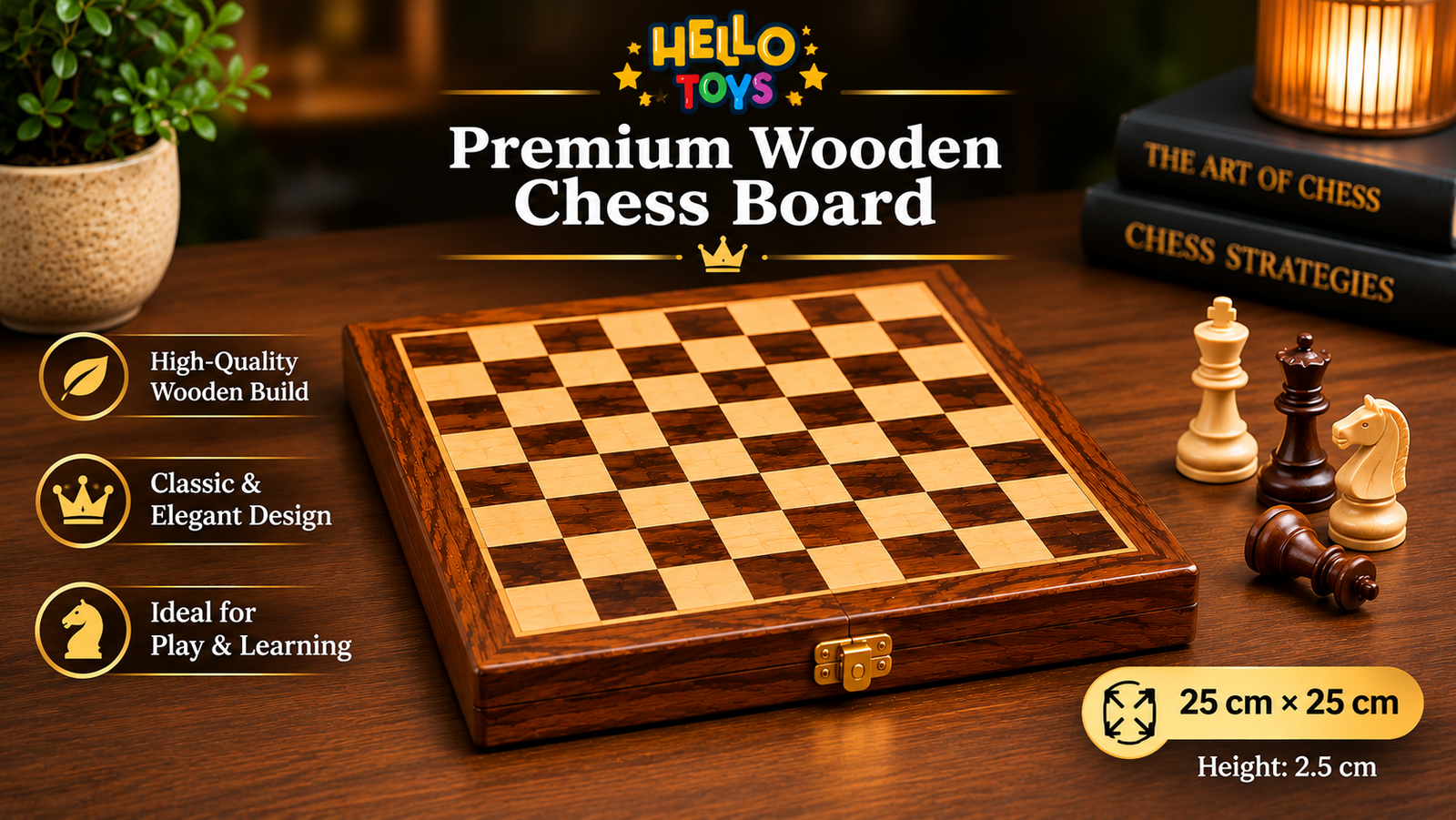
Chess for Beginners: Rules, Benefits & How to Play Chess
Chess is more than just a board game. It is a fascinating combination of strategy, planning, patience and decision-making that has entertained people across generations.
Whether you are introducing your child to their first strategy game, learning chess yourself or looking for an engaging indoor activity for the family, chess is an excellent choice.
With just 64 squares and 32 pieces, this classic game offers countless possibilities. Every move creates a new challenge, encouraging players to think ahead, understand their opponent’s strategy and make thoughtful decisions.
In this guide, we will explore how to play chess, the basic chess rules, how each piece moves, the benefits of playing chess for kids and how to choose the right chess board.
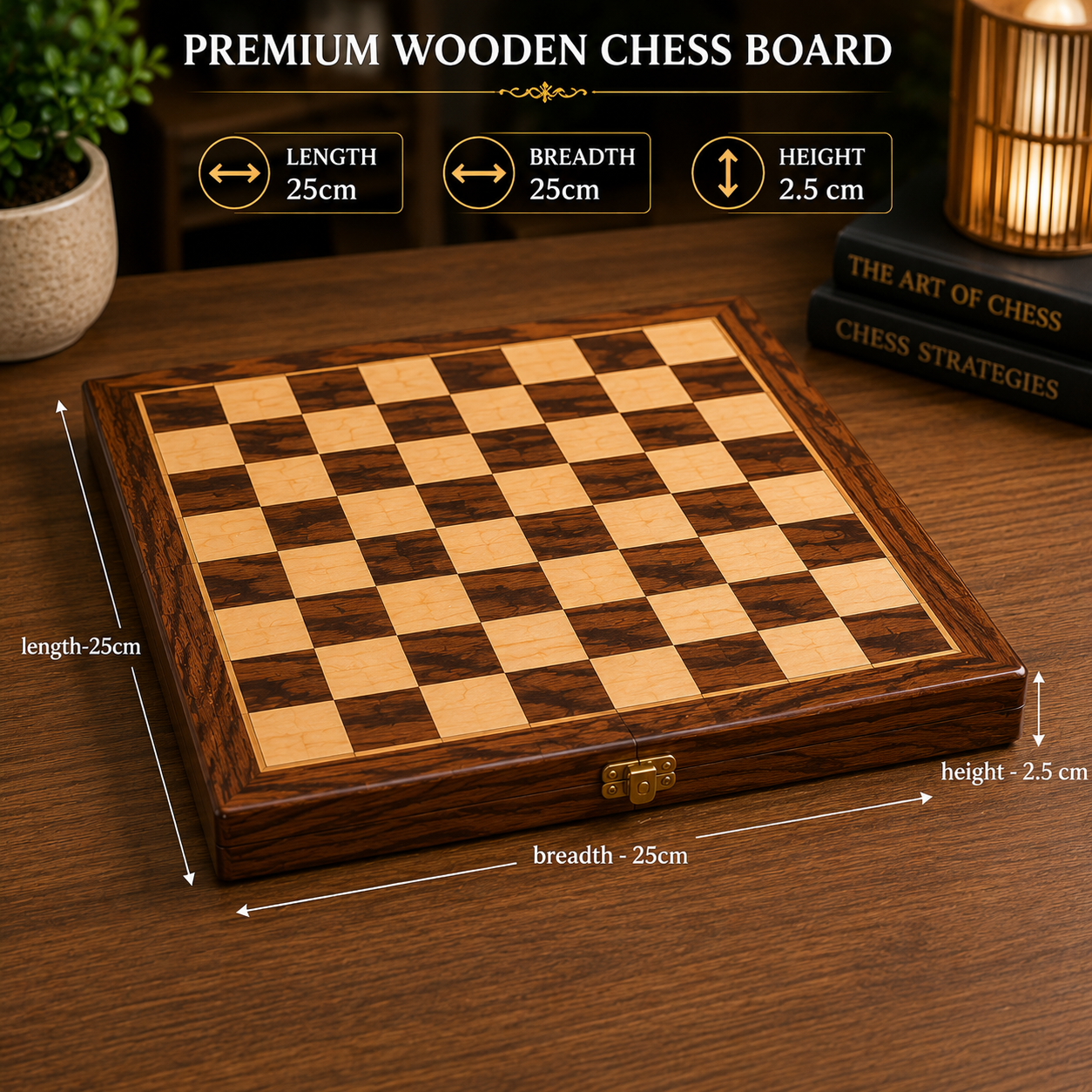
Chess is a two-player strategy board game played on a square board consisting of 64 squares arranged in an 8 × 8 grid.
Each player starts with 16 pieces:
One player controls the white pieces, while the other controls the black pieces.
The main objective is to checkmate your opponent’s king. Checkmate occurs when the king is under attack and there is no legal move that can remove the threat.
Unlike games based primarily on luck, chess involves planning, logical thinking and strategic decisions.
Before starting a game, it is important to arrange the chess pieces correctly.
Follow these simple steps:
Remember the simple rule: Queen on her own colour.
White always makes the first move.
Understanding how each chess piece moves is the first step towards learning the game.
The king is the most important piece in chess.
It can move one square in any direction: horizontally, vertically or diagonally.
The king cannot move to a square where it would be under attack by an opponent’s piece.
The queen is the most powerful chess piece in terms of movement.
She can move any number of unobstructed squares horizontally, vertically or diagonally.
This makes the queen extremely useful for attacking and defending.
The rook moves horizontally or vertically across any number of unobstructed squares.
Each player starts with two rooks, positioned in the corners of the board.
The bishop moves diagonally across any number of unobstructed squares.
Each player has two bishops. One remains on light squares and the other remains on dark squares throughout the game.
The knight moves in an L-shaped pattern:
The knight is the only chess piece that can jump over other pieces.
Pawns generally move one square forward.
On their first move, a pawn has the option to move two squares forward if both squares are clear.
Pawns capture opponent pieces diagonally, one square forward.
When a pawn reaches the opposite end of the board, it can be promoted to a queen, rook, bishop or knight.
Once you understand how the pieces move, it is time to learn some important chess rules.
A check happens when a king is under attack by an opponent’s piece.
The player must respond by moving the king, capturing the attacking piece or blocking the attack, where possible.
Checkmate occurs when a king is in check and no legal move can prevent the attack.
The player delivering checkmate wins the game.
A stalemate occurs when a player has no legal moves but their king is not in check.
The game ends in a draw.
Castling is a special move involving the king and one rook.
It allows the king to move two squares towards the rook while the rook moves to the square immediately beside the king on the other side.
Castling is permitted only when specific conditions are met, including that neither piece has previously moved, the squares between them are clear, and the king is not in check or passing through an attacked square.
En passant is a special pawn capture that can occur immediately after an opponent moves a pawn two squares forward from its starting position.
It allows an eligible pawn to capture that pawn as though it had moved only one square.
Chess offers children an enjoyable way to practise important thinking and social skills.
Here are seven reasons why parents can introduce chess as part of their children’s playtime.
Chess requires players to understand the position of different pieces and consider possible moves.
Children learn to examine situations and think about the consequences of their decisions.
Every chess game presents different challenges.
Players must find solutions, identify threats and look for opportunities to improve their position.
This provides regular opportunities to practise problem-solving.
Chess requires players to pay attention to the entire board.
A single overlooked move can change the direction of a game.
Playing regularly encourages children to focus on their moves and observe their opponent’s actions.
Chess is not about making random moves quickly.
Players need to think carefully before deciding what to do next.
This makes chess a useful activity for practising patience and thoughtful decision-making.
Chess introduces children to the idea of thinking ahead.
Instead of focusing only on the next move, players learn to consider different possibilities and plan their strategy.
Chess teaches children that winning and losing are both parts of playing a game.
They learn to respect opponents, follow rules and accept the outcome of a match.
Chess is an excellent activity for parents and children to enjoy together.
A friendly match at home can create quality family time while introducing children to an interesting new hobby.
Finding interesting activities for children at home can sometimes be challenging.
Chess offers an engaging alternative to passive entertainment and screen-based activities.
It requires very little setup and can be played almost anywhere with a suitable chess board.
Here are some reasons to include chess in your indoor game collection:
Chess is also a wonderful activity for weekends, family game nights and friendly competitions.

When choosing a chess set, you may come across traditional and magnetic chess boards.
Both offer the same basic chess gameplay, but their designs serve slightly different purposes.
Traditional chess boards feature regular chess pieces placed on a standard playing surface.
They are suitable for playing at home, clubs and other locations where the board can remain undisturbed.
Magnetic chess boards feature pieces with magnetic bases that help them stay in position on the board.
Some designs are particularly convenient for travel and portable play.
Why choose a magnetic chess board?
If you enjoy playing chess while travelling or want a more portable game set, a magnetic chess board can be a practical option.
Choosing the right chess board can make learning more enjoyable.
Consider these factors before purchasing:
1. Board Size: Choose a board with clearly visible squares and pieces that are comfortable to handle.
2. Piece Quality: Look for well-made chess pieces with stable bases.
3. Portability: If you plan to travel with your chess set, consider a compact or foldable design.
4. Magnetic Features: A magnetic board can be useful for keeping pieces in position during movement.
5. Age Suitability: Check the recommended age and ensure the pieces are suitable for the intended player.
6. Ease of Storage: A chess set with convenient storage helps keep all pieces organised.
Chess is one of many games that encourage strategic thinking and problem-solving.
Other popular brain games also offer interesting challenges.
| Game | Main Play Experience |
|---|---|
| Chess | Strategy and planning |
| Rubik’s Cube | Pattern recognition and solving |
| Wooden Puzzles | Spatial reasoning |
| Magnetic Chess | Portable strategic gameplay |
| Tumbling Tower | Balance and decision-making |
| Sudoku | Number and logic puzzles |
Rather than choosing only one, parents can introduce different games to provide a variety of play experiences.
The main objective is to checkmate your opponent’s king. This means attacking the king in a way that leaves the opponent with no legal move to escape the threat.
A standard chess game starts with 32 pieces in total, with each player controlling 16 pieces.
Children can begin exploring basic chess concepts when they are ready to understand simple rules and piece movements. The appropriate age depends on the child’s interest and learning ability.
Chess provides opportunities to practise concentration, logical thinking, planning and problem-solving. Regular play can make learning these skills enjoyable.
The basic rules and piece movements can be learned relatively quickly. Developing stronger strategies and understanding advanced concepts takes regular practice.
Absolutely! Playing against another beginner is a great way to practise piece movements, understand the rules and become more comfortable with the game.
A magnetic chess board has chess pieces with magnetic bases that help them remain in position during play. It is particularly useful for portable chess sets.
Yes. Chess is a two-player game that can be enjoyed by children and adults. It is a great way to spend quality time together.
A great game is one that keeps you thinking, learning and enjoying every moment.
Chess offers an exciting combination of strategy, patience and friendly competition. Whether you are introducing your child to their first chess game or looking for a new family activity, it is a timeless addition to any indoor game collection.
At Hello Toys, we believe that playtime can be an opportunity to explore new ideas, discover interests and enjoy meaningful challenges.
Explore the world of puzzles, brain games and educational toys at Hello Toys.
Think Smart. Play Better. Make Every Move Count!


Leave a comment